


Gardening
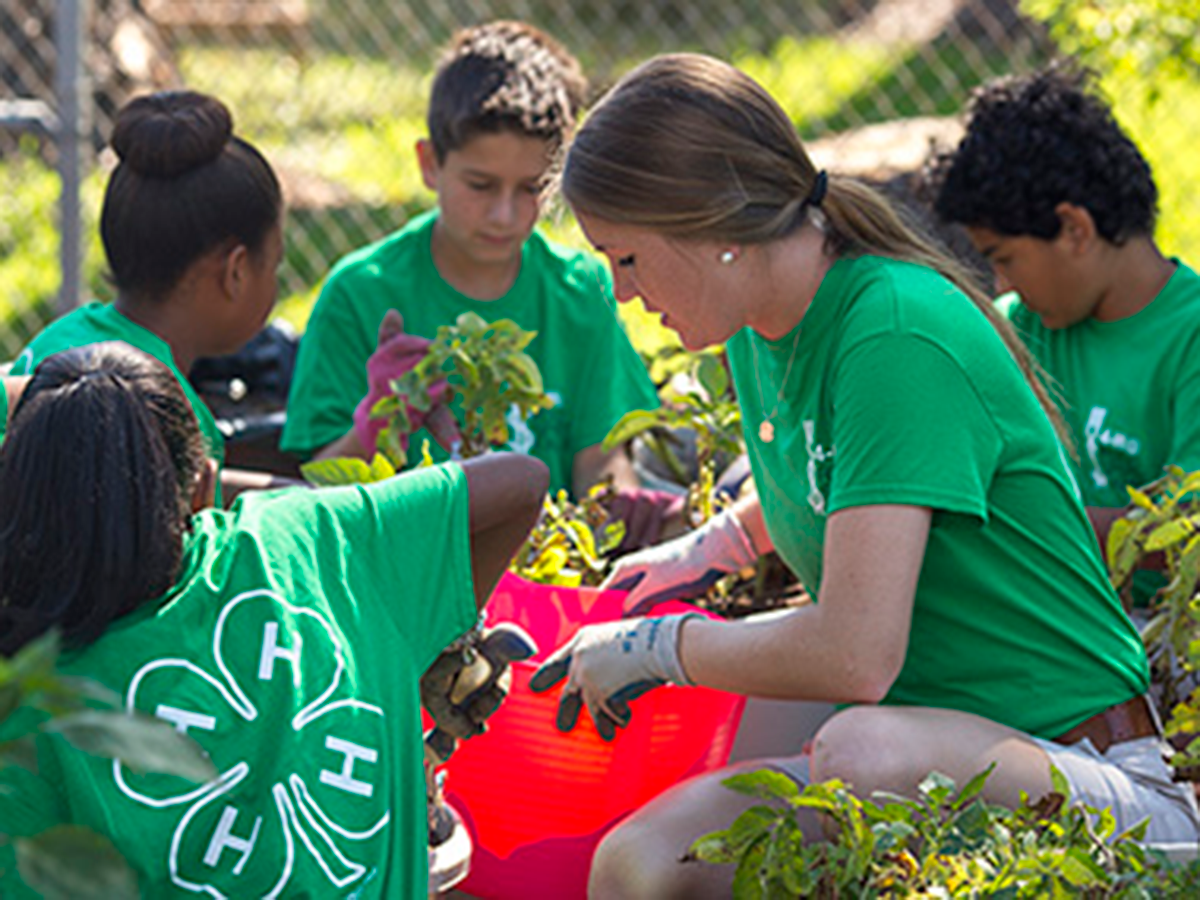
It may take three years to complete a level. You must complete a minimum of seven activities and five learning experiences each year to complete this project.
Projects to learn
At level A of gardening, students will learn
- how to plan an in-ground or container garden
- prepare soil; and when, where, and what to plant.
- basic plant science
- garden friends and foes
- tool safety
- using the vegetable harvestand horticulture-related careers
- germinating seeds
- growing a super-sized pumpkin
- experiments with plant parts
- visiting a grocery store to explore vegetables
At level B of gardening, students will learn
- how to modify garden plans
- seed varieties and cultivars
- starting seeds indoors
- using transplants, composting
- integrated pest management
- plant families
- how plants respond to light
- how to grow new plants from plant parts
- building a plant maze
- making a worm box
- judging vegetables, and composting
At level C of gardening, students will learn
- different planting methods
- how to improve soil
- how to extend the growing season
- photosynthesis
- hybrid vs. standard forms
- herb gardening and preservation
- plant companions
- storing and saving seeds
- how to identify and prevent weeds
- insect damage
- animal pests
- cross-pollinating flowers
- making an acid/base indicator
- producing a chromatogram
- helping others in garden projects
At level D of gardening, students will learn
-
to maximize garden space using different planting methods
-
how to harvest, store, preserve, and/or sell vegetables and herbs
-
plant genetics
-
plant diversity
-
plants in space
-
integrated pest management and horticulture-related careers
-
using garden-planning software and apps
-
investigating effects of pollution
-
growing hydroponic plants
-
conducting a cultivar trial
Independent study is for any youth looking for new challenges and opportunities in 4-H. This allows a member to explore topics that have not been investigated while remaining enrolled in a 4-H project. Members enrolling in the independent study phase of a project should
- develop a detailed learning plan for their work
- identify an area of interest within the project area
- set goals and locate resources (people, publications, materials) to carry out a project plan
- determine specific experiences needed to accomplish project goals,
- set a realistic timeline for completion
- carry out the project learning plan,
- share experiences with others
- evaluate outcomes and determine what could be improved.
PROJECT REQUIREMENTS
The individualized learning plan should be approved by a parent, 4-H adult volunteer leader or 4-H agent. For assistance in developing a personal learning contract, use Design Your Own project materials or other goal-setting materials. While independent study provides flexibility and creativity, it also requires serious planning, implementation and evaluation.
Materials you'll need
M See them Sprout, 4H1037
M Let’s Get Growing, 4H1038
M Take Your Pick, 4H1039
M Growing Profits, 4H1040
M You Decide, 5314
L Helping Them Decide, 5315
S Suggested 4-H Garden Exhibits, 4H970W
L Gardening Helper’s Guide, 4H1041W The Leader/Helper’s Guide provides additional information for adult volunteers to expand on topics in the youth manuals. This guide includes additional activities that are great for after-school or club settings and includes answers to the questions posed in youth books.
Non-Animal Record Books
A Project/Financial Journal is needed for each non-animal related project. Project journals need to contain the name of the project, the year these records were kept, and a leader/parent signature. All sections of the journal need to be completed. If nothing was done in an area or section of a record sheet, the word “none” or something similar should be written.
Careers in Gardening
If you are wanting to explore careers in gardening, below are some of the potential routes you can take. 4-H members interested in going to college can also visit the 4-H foundation website for scholarships in their county or reservation.