


Robotics
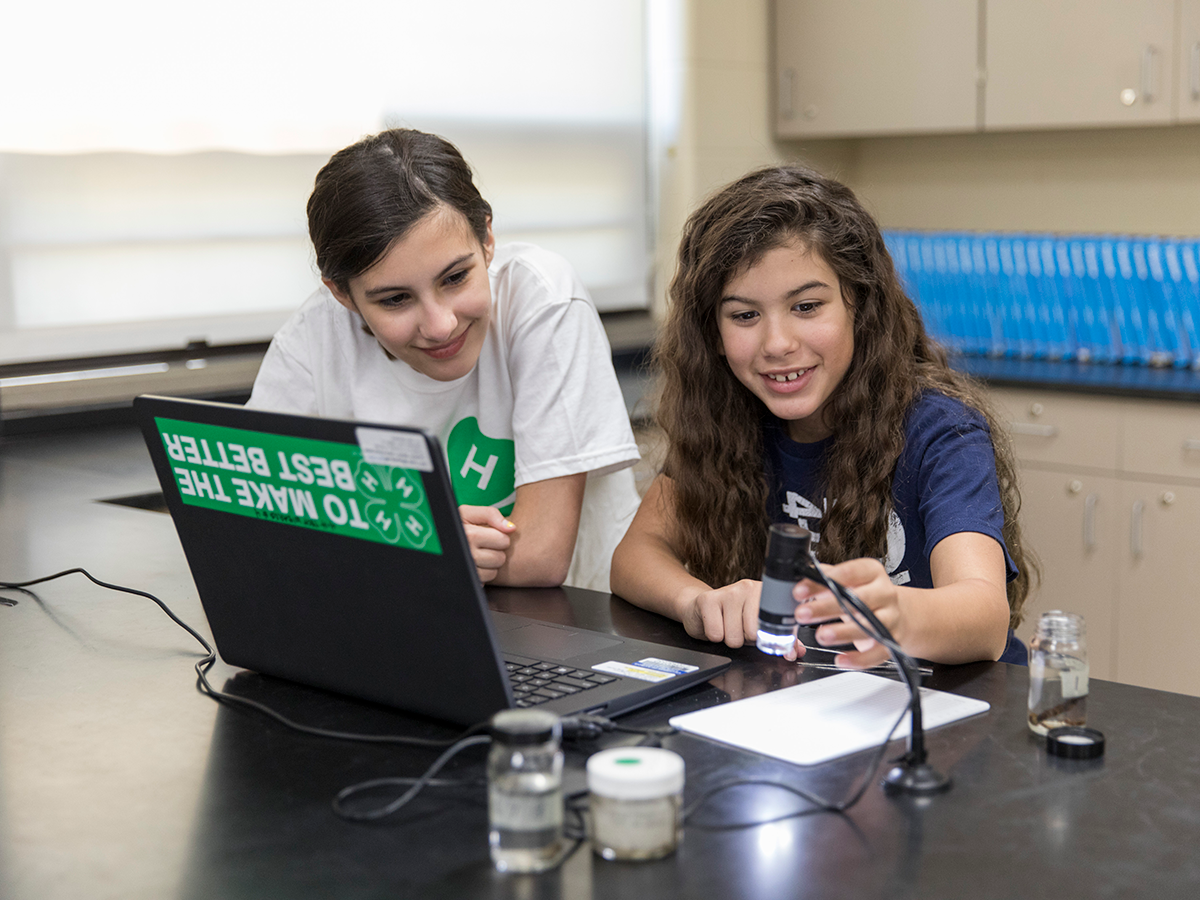
Robotics introduces science, math, engineering and technology skills while teaching life skills. There are three different kinds of projects available in Robotics. ‘Introduction to Modern Microcontrollers’ is designed to be used with the SparkFun Inventor’s Kit, the EV3 project is designed to be used with the Lego robotics kit and the Junk Drawer project is designed to be used with everyday materials.
It may take three years to complete a level. You must complete a minimum of seven activities and five learning experiences each year to complete this project.
Projects to learn
At level 1 of robotics, students will learn
- robot arms
- pnuematics
- arm designs
- three-dimensional space
- form and function
- scientific habits of mind
- engineering design
Robotics Essentials
- Choose from two recommended platforms (LEGO® SPIKE® or VEX®) to learn what a robot is, how to build one, and how to program it. See ohio4h.org/robotics for details.
- A computer for running the programming software and internet access for watching videos are required. The VEX IQ Education Kit (2nd Generation) is recommended as an accompanying robotics kit resource, found at https://www.vexrobotics.com/228-8899.html or wherever you find a VEX IQ Education Kit (2nd Generation set (SKU 22808899).
Introduction to Modern Microcontrollers
- Microcontrollers are the electronic “brains” inside robots and other smart devices we use every day. Program a microcontroller to react, calculate or move a specific way when it measures a response from one or many sensors. This project combines electronics, mechanics, programming and, above all, creativity to learn the basics of microcontrollers. We will first introduce the Arduino microcontroller which is an open-source prototyping platform based on easy-to-use hardware and software. Arduino boards are able to read inputs - light on a sensor, a finger on a button, or an X social media message - and turn it into an output - activating a motor, turning on an LED, publishing something online. Other microcontrollers like Rasberry Pi, Picax, Beaglebone and Edison will be added as technology emerges.
At level 2 of robotics, students will learn
- robots that move with legs
- wheels
- underwater
- friction
- basic electrical power
- motors
- engineering constraints
- gear system
- buoyancy
At level 3 of robotics, students will learn
- sensors
- analog
- digital systems
- simple electronic components
- build basic circuits to see how the components work
- basic elements of programming
- instructions for robotic computer control
- build robots from everyday items
Independent study is for any youth looking for new challenges and opportunities in 4-H. This allows a member to explore topics that have not been investigated while remaining enrolled in a 4-H project. Members enrolling in the independent study phase of a project should
- develop a detailed learning plan for their work
- identify an area of interest within the project area
- set goals and locate resources (people, publications, materials) to carry out a project plan
- determine specific experiences needed to accomplish project goals,
- set a realistic timeline for completion
- carry out the project learning plan,
- share experiences with others
- evaluate outcomes and determine what could be improved.
PROJECT REQUIREMENTS
The individualized learning plan should be approved by a parent, 4-H adult volunteer leader or 4-H agent. For assistance in developing a personal learning contract, use Design Your Own project materials or other goal-setting materials. While independent study provides flexibility and creativity, it also requires serious planning, implementation and evaluation.
Materials you'll need
M Robots on the Move, BU8432
M Youth Robotics Notebook*, BU8435
M Mechatronics, BU8433
M You Decide, 5314
L Helping Them Decide, 5315
M Youth Robotics Notebook*, BU8435
*There is one Robotics Notebook for three levels of the Junk Drawer Robotics curriculum. The notebook encourages youth to think and act like scientists and engineers.
Non-Animal Record Books
A Project/Financial Journal is needed for each non-animal related project. Project journals need to contain the name of the project, the year these records were kept, and a leader/parent signature. All sections of the journal need to be completed. If nothing was done in an area or section of a record sheet, the word “none” or something similar should be written.
Careers in Robotics
If you are wanting to explore careers in robotics, below are some of the potential routes you can take. 4-H members interested in going to college can also visit the 4-H foundation website for scholarships in their county or reservation.