

The Great Gray Owl and Critical Nesting Habitat in Snags
By Jim Watson - Montana Tree Farm Member
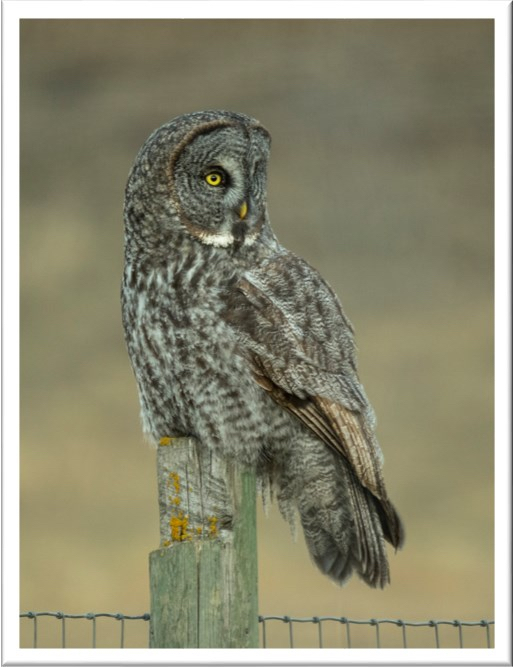
Spring Brook Ranch, Kalispell, Montana
Our Great Gray Owl study is entering its sixth year. Similar to other species projects, we are conducting long-term monitoring of nest sites, banding chicks, collecting data, and surveying new areas. In conjunction to our base study, we are also interested in learning more about their nesting needs.
A special focus of our Great Gray project is to record the measurements of nest snags. Similar to cavity nesting owls, Great Gray Owls depend on specific site characteristics to nest. While obligate cavity nesters need the holes of woodpeckers, natural tree holes, or nest boxes, Great Grays rely on large, broken-topped trees, called snags, or the abandoned nests of other large birds. When the owl nests on the top of a broken snag, the bowl must be large enough to accommodate its massive size. In recording the measurements of these snags, we are building a predictable model to identify, and potentially manage for, these unique, dead trees. Snags are a critical component of forest ecosystems and provide homes for a myriad of species. Again and again, we find them removed from otherwise ideal Great Gray habitat. As a result, public education is a key focus of this project.
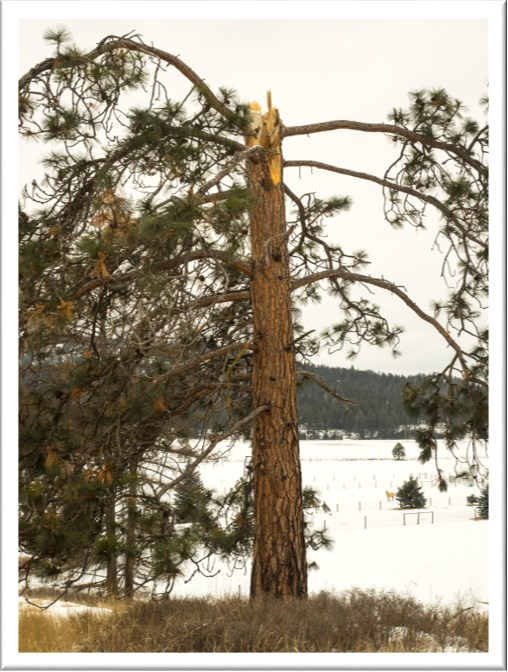
As with all studies, sample sizes must be large enough for meaningful results, so we will continue to collect data for this special project. Do you know of a Great Gray nest? Please let us know. We are following up with as many leads as we can in order to grow our sample size.
Additionally, if you haven't checked out the Great Gray Owl Cam, you are in for a real treat. Although the nest is currently empty, you can enjoy highlights from last season and get ready, hopefully, for the pairs' return! The Great Gray nest cam is made possible through our partnership with explore.org or https://www.owlresearchinstitute.org/great-gray-owlconservation.