
Key to Lichens
There are reported to be more than 1000 different kinds of lichens in the Rocky Mountains alone. From a coarse identification perspective there are three main types: Foliose—that are leaf like and have two sides, Fruticose— that are hair like or shrub like, and Crustose— that form crusts on rocks, trees and even cars. Lichens are a unique symbiotic organism that consists of Algae that photosynthesize and produce sugars, fungi that supply minerals and water, and cyanobacteria that fix nitrogen and can also photosynthesize. Many contain usnic acid that has strong antibiotic properties and has been used in folk medicine to treat tuberculosis and other infections. Usnic acid is what gives lichens their bitter taste, and in high enough concentrations can disagree with some people. Some lichens produce vulpinic acid that is toxic to humans.
Liking those lichens-you see them every day in the forest, but how well do you know them?
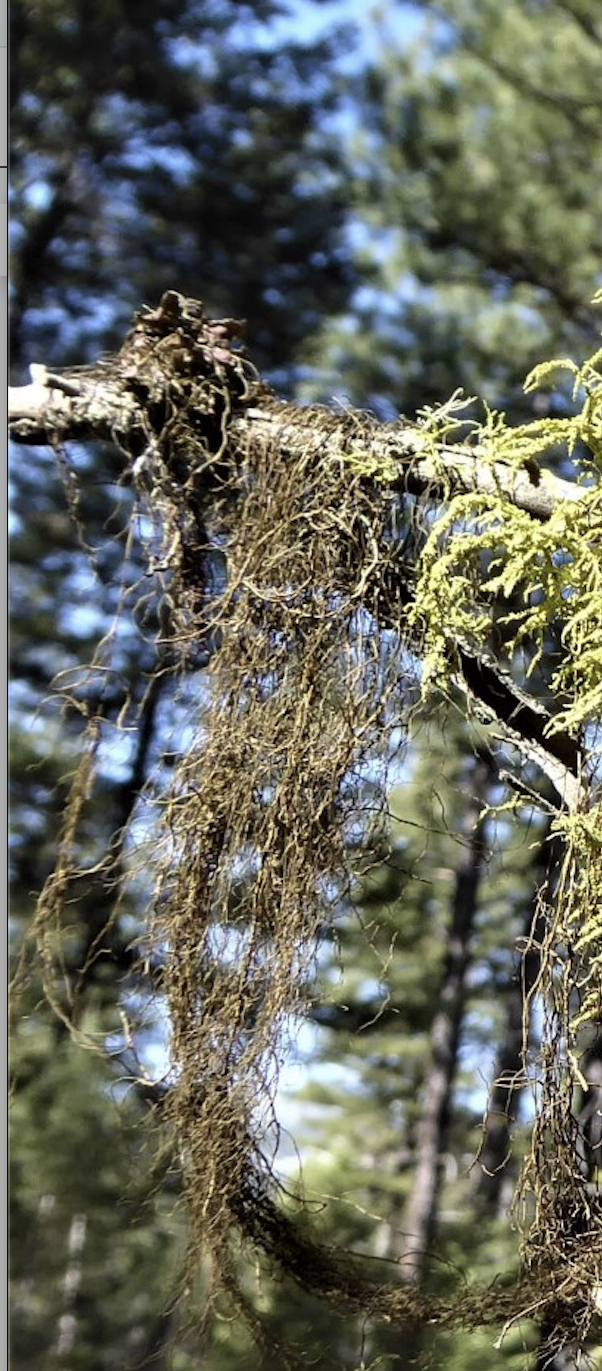
1. Bryoria fremontii - Edible horsehair, or Tree hair—is brown in color, fine textured and can grow to be 3 feet long. Although it can be eaten raw it is very bitter. For consumption it was soaked in water for several days and then steamed. It has been reported that this lichen gathered from 3 trees could supply a family with food all winter. Early European explorers consumed it but most reported it to be indigestible. It is also a great fire starter and is a favorite winter food for deer and elk.
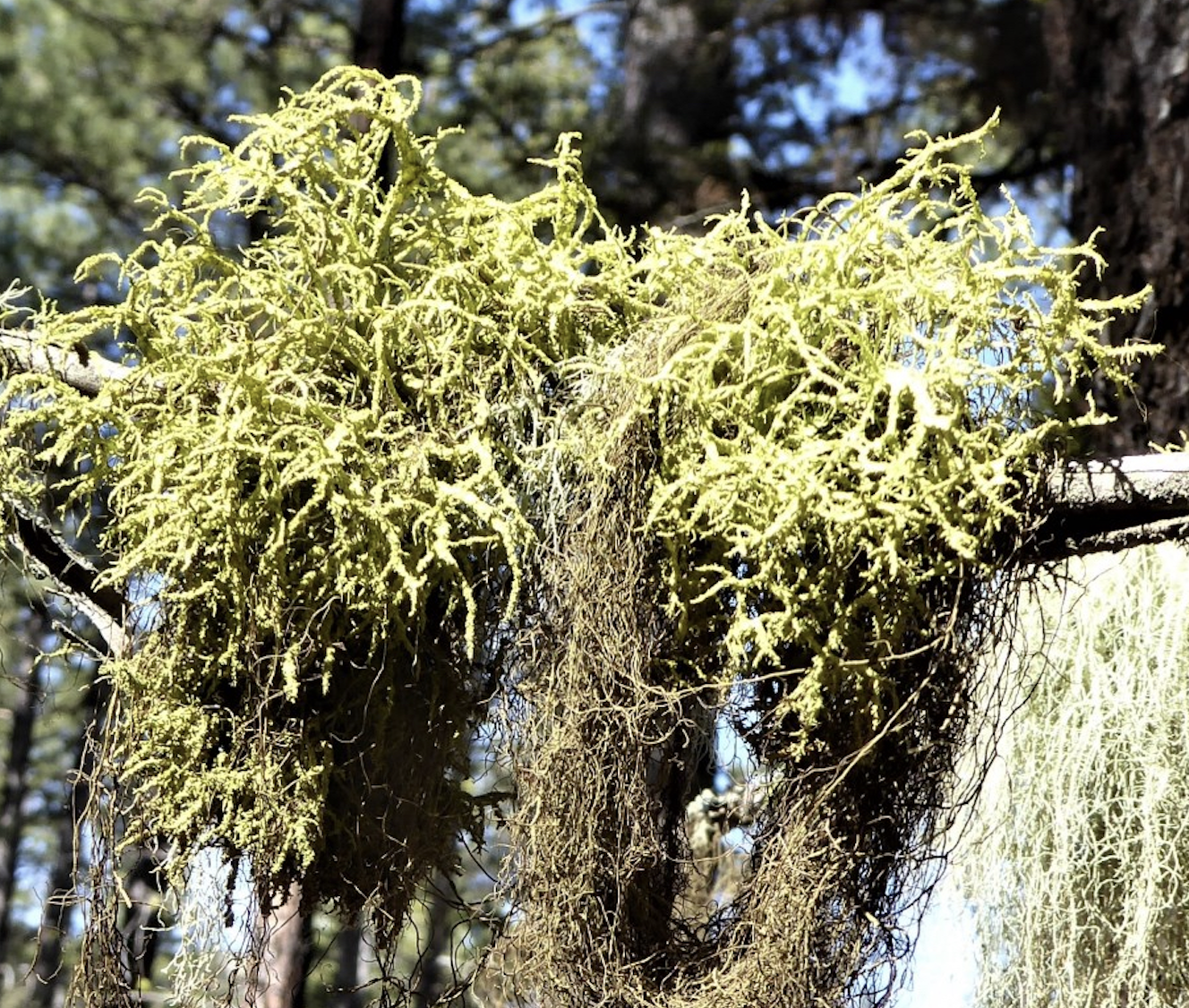
2. Letharia vulpina - Wolf lichen - The wolf lichen has a bright yellow-green colour and grows in Europe and western North America. It contains a yellow chemical called vulpinic acid, which is poisonous to mammals. In the past, wolf lichen mixed with ground glass and meat was used as a poison for wolves. It's unknown if the lichen or the glass was most responsible for their death.
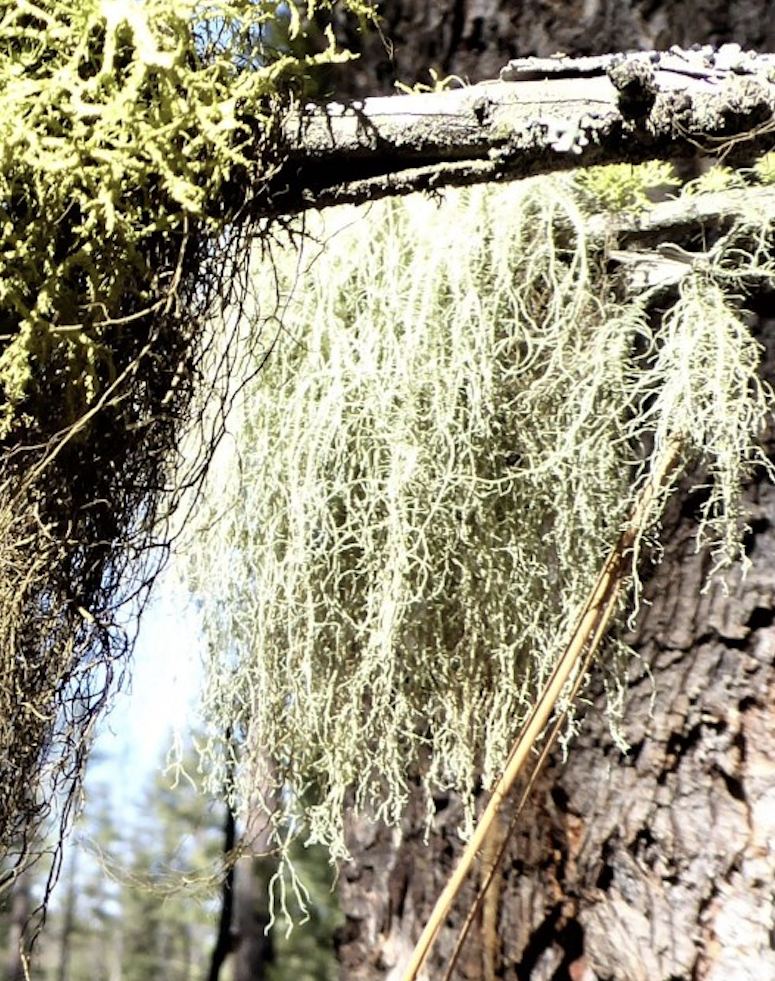
3. Usnea longissimi - Old man’s beard. This rarer lichen hangs from a central stalk and can get up to several feet in length. Its habitat is shrinking and instead of establishing itself via spores, parts of it break off and reestablish elsewhere. Like many lichens, it is very sensitive to air pollution and a strong indicator of clean air.
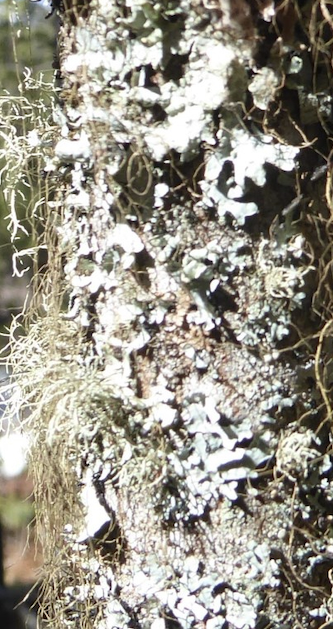
4. Paemelia sulcate -Waxpaper, or Powdered shield. This is one of the most common lichens found in forests and hummingbirds use it extensively to make their nests. Native and European people used it to make yellow-brown dyes for clothing.
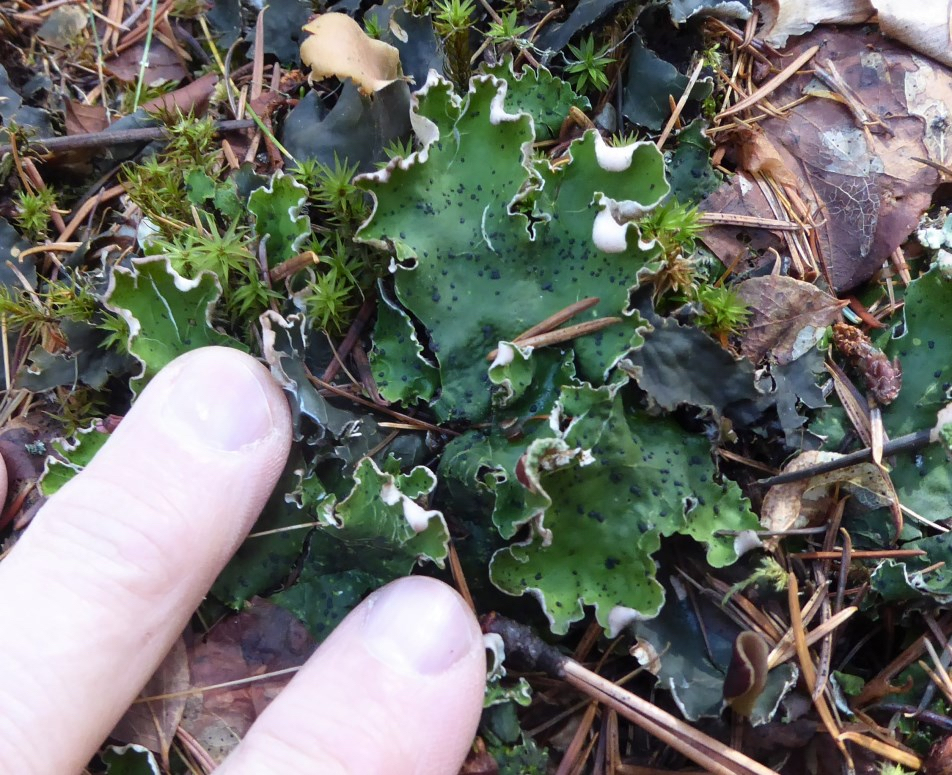
5. Peltigera aphthosa, Freckle pelt lichen. This is a common ground dwelling lichen belonging to a group including a paler version of “dog pelt” lichen that might have the more species in the Rocky mountains than anywhere else in the world. The dark spots on the lobes are pockets of cyanobacteria that "fix" nitrogen.
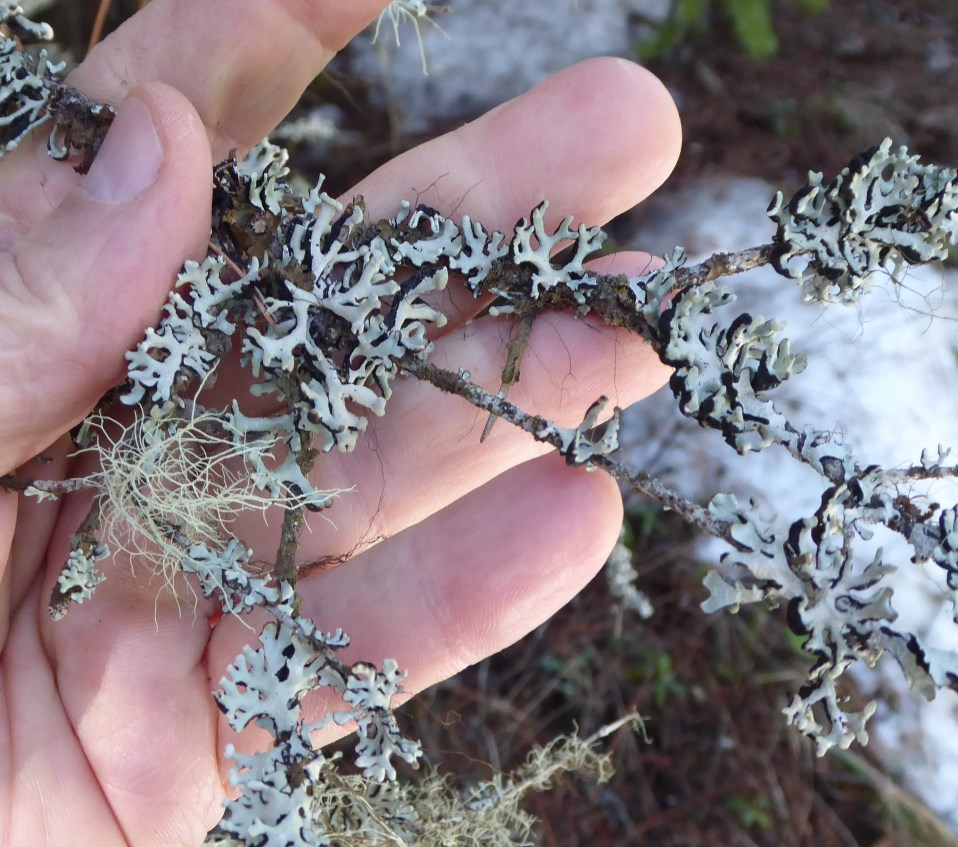
6. Hypogymnia physodes—Grey monks hood, or hooded bone. Pale upper lobes with black lower surfaces help identify this common lichen. It is one of the most pollution resistant lichens and is often found in city parks.
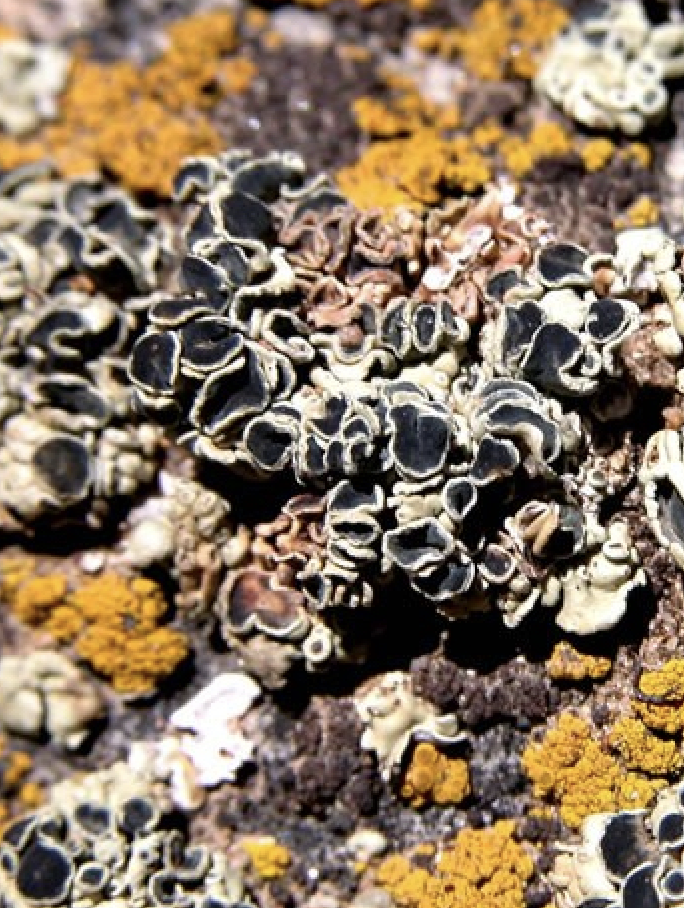
7. Lecanora garovaglii, Gray crust, with other crusts, on a rock. Photo by Chris Wagner, U.S. Forest Service.
8. Pleopsidium chlorophanum, Yellow crust, with other crusts, on a rock. Photo by Chris Wagner, U.S.F.S.
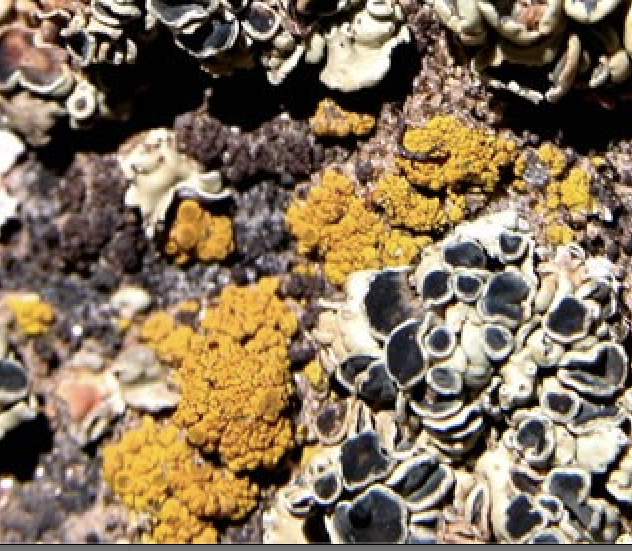
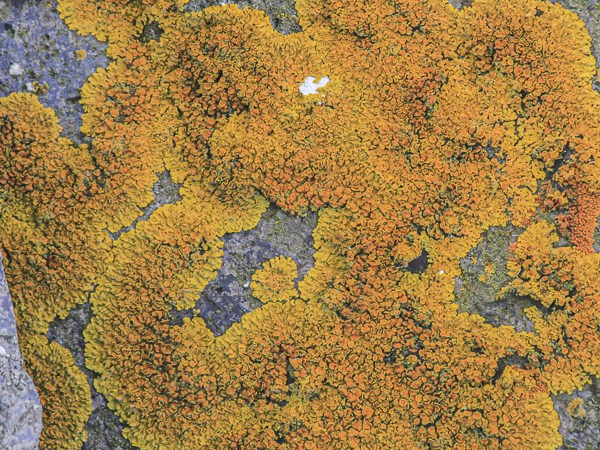
9. Xanthoria—Sunburst lichen. Even though this lichen appears crust-like, the leafy lobes identify it as a foliose lichen. This lichen is an indicator of high nutrient status and it may indicate where animals have been urinating in city parks. It is unknown if it is native in Montana or considered an invasive.
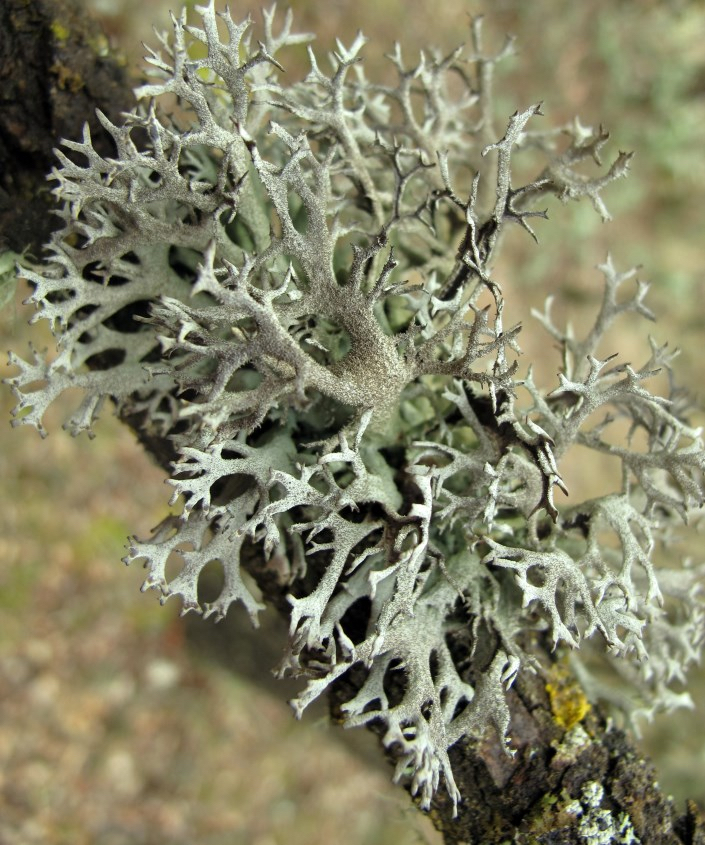
10. Pseudevernia furfuracea, - Tree moss. Commonly grows on the bark of firs and pines and is rather sensitive to air pollution. The species has numerous human uses, including use in perfume, embalming and in medicine. It is reported to have biochemicals that are very effective at absorbing heavy metals and is being studied as a bioremediation solution for polluted sites.
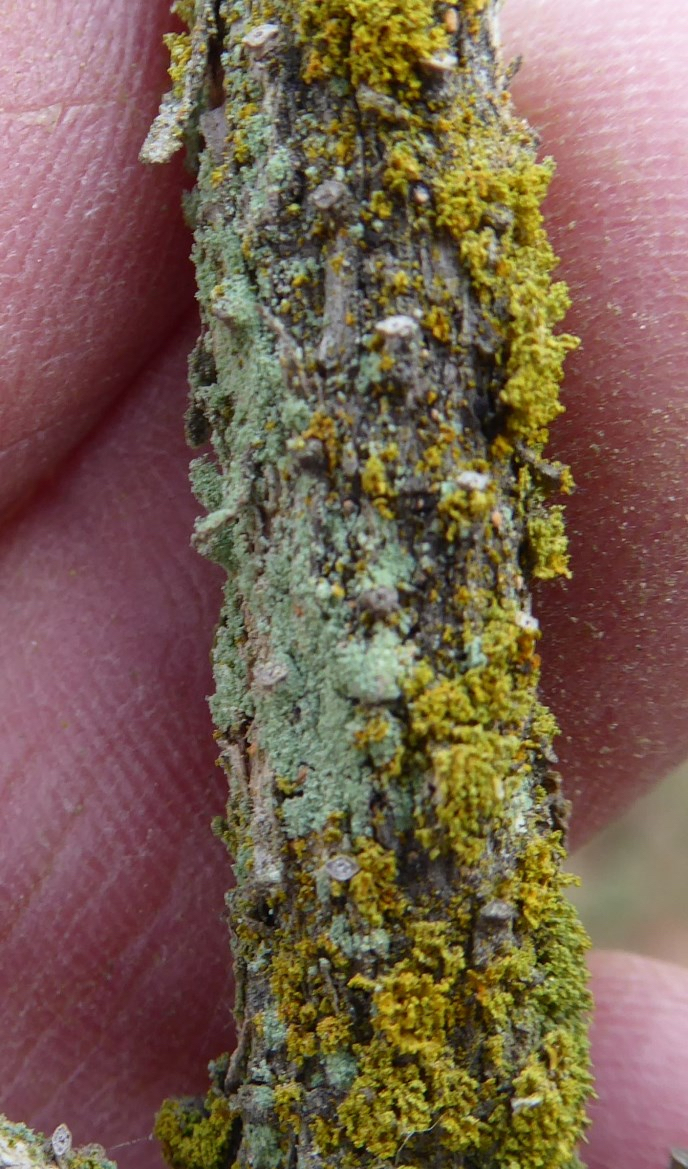
11. Candelariella. Found across the globe, although most commonly described in North America, Asia, and Australia. Species can be found on rock, soil, tree bark, mosses, and other lichens. While some species may grow only on rock, and others only on trees, the more generalist species can be found in a variety of locations. This was on a dead spruce branch in a shaded riparian area.