

What is Climate Smart Forestry?
By Ed Levert — Forest Stewardship Foundation Chair
What is Climate Smart Forestry? When I first heard the theme of this edition, I had to scratch my head and wonder what it was all about. Haven’t foresters always practiced Climate Smart Forestry? Well, maybe we haven’t always recognized the increasing importance of the change in our climate over the past 40 years or so. Sure, we recognized the significance of wildfire back in the 80s, but I don’t think any of us were giving much thought to the lengthening fire season or the impacts of a population expanding into the Wildland Urban Interface (WUI).
As far as the forestry aspects of forest management in the distant past, I and many others have probably been more concerned with maximizing forest production than adjusting for climate change. When I first began practicing forest management back in the 60s, a big fire was one that was perhaps 200-300 acres in northwest Montana that would only happen about every three years. Now, look at the size and frequency of fire.
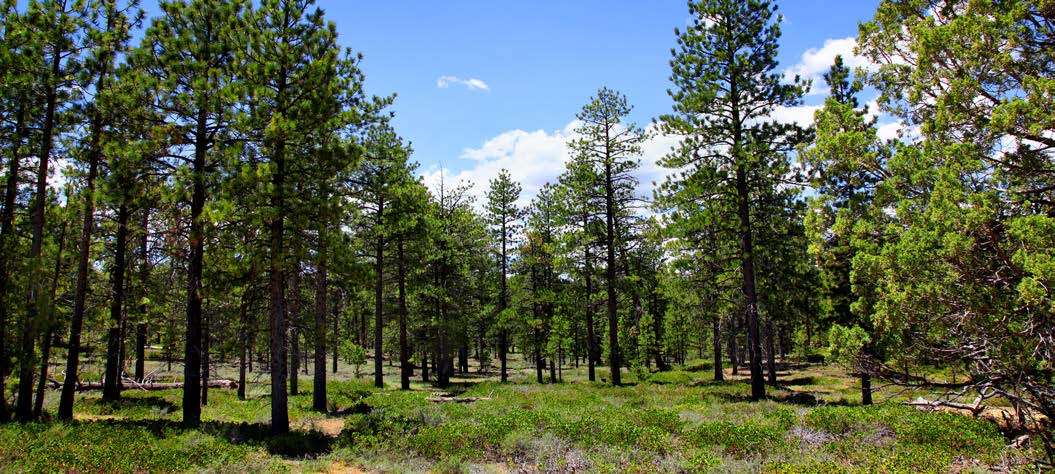
With my current ‘perfect vision’ of the future, I would see forest landowners thinning forest stands to a wider spacing to keep the crowns separated to avoid crown fire potential. And they would minimize shade-tolerant species like grand fir, hemlock and spruce, which are going to have a hard time surviving in an increasingly warmer and hotter environment. I would also favor more fire-resistant species like ponderosa pine and western larch. Longer rotations would allow for more trees to reach larger diameters where bark thickness can really help protect a tree in less intensive ground fires. The forest understory would be minimized. Forest landowners would work across boundaries to ensure forest practices have a greater impact on protecting larger areas in the WUI.
Laurie Yung of the University of Montana is currently initiating “Strategic Foresight Teams” in several Montana counties to explore community plans for 20-50 years and beyond. This approach evaluates the many facets of community preparedness, including climate change, population growth, community infrastructure needs and, certainly, wildfire. Climate Smart Forestry needs to be a part of this exercise.
Today we are at a crisis point in protecting residents from a potentially devastating wildfire. To resolve this, it is going to take the full engagement of all forest landowners and city, county, state and federal entities, which I see happening more and more. Private forest landowners need to be an integral part of our success in Climate Smart Forestry.